Mongolia: 600 KM into the Gobi Desert, Under a Sky Full of Stars
 Afshana Diya
· ·8 min read
Afshana Diya
· ·8 min read
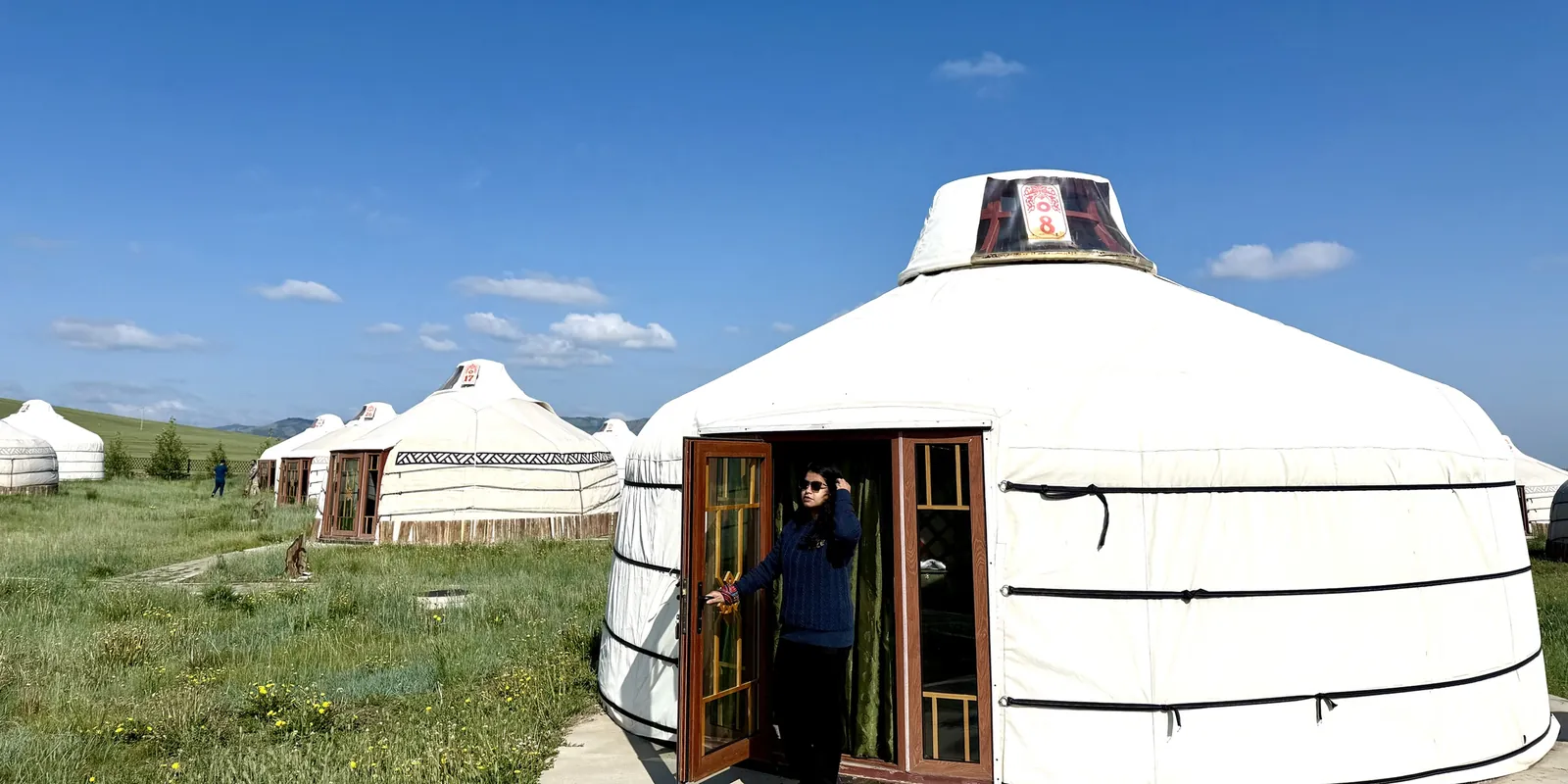
I have slept in a lot of places. Hotels, resorts, Airbnbs, boutique hotels, airports, sleeping pods, overwater villas and overnight trains. But if you ask me which night I still think about, I will not pick any of them. I will pick a ger on the Mongolian steppe, with no light, no sound and a sky so full of stars it felt unreal.
Mongolia was my 49th country. I spent around ten days there, first for JCI ASPAC 2025 and then on the road. This is the story of those days.
Trip at a glance
- Route: Ulaanbaatar, Elsen Tasarkhai (the “Mini Gobi”), Kharkhorin and the Gobi
- Visa: arranged by ASPAC for participants. Mongolia now offers an e-visa for most countries.
- Stay: a luxury ger camp near Kharkhorin
A childhood promise
Long before I ever had a passport, the Gobi was already in my head. I was a kid reading a schoolbook that called it one of the biggest deserts in the world. I remember trying to imagine that much sand and that much empty space. It felt like a place that existed only on paper.
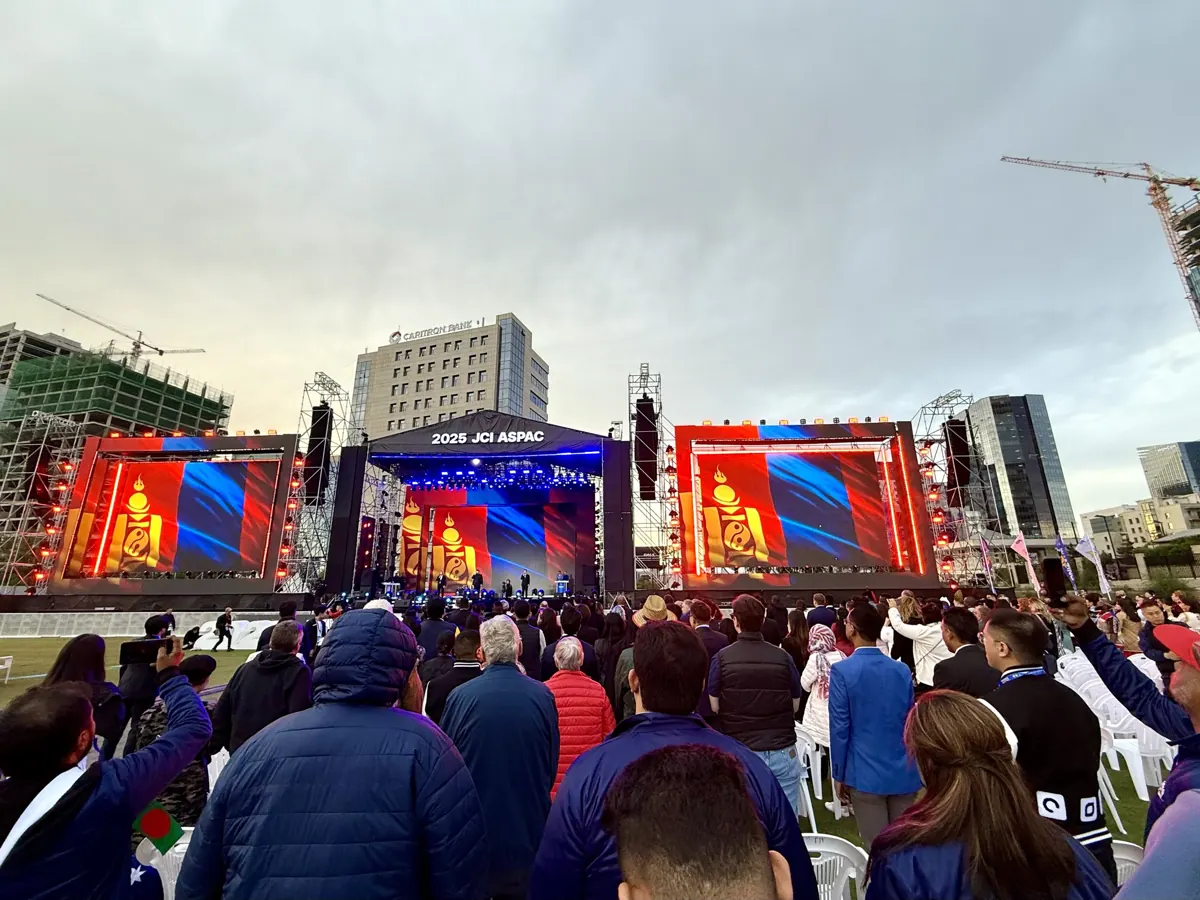
So when JCI ASPAC 2025 took me to Ulaanbaatar in June 2025, I made a quiet promise to that little girl. I was not leaving Mongolia without seeing the Gobi.
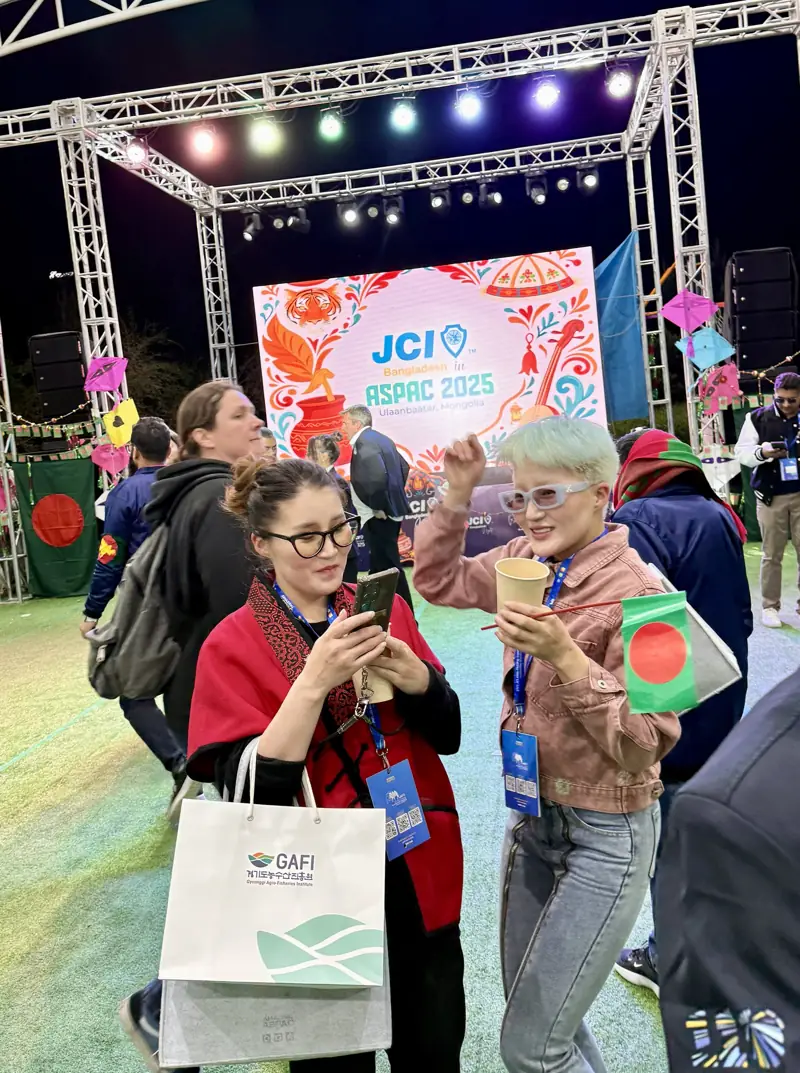
I was not alone. My full JCI Dhaka Founders team came with me, part of more than 80 delegates from JCI Bangladesh among almost 5,000 from around the world. For a few days the whole city felt like one big gathering of young leaders.
The visa I could not get alone
Now the part every Bangladeshi traveler will want to know. When we went, a regular Mongolia visa was not available for Bangladeshi passport holders. I could not have just booked a ticket and gone.
What opened the door was the conference. The ASPAC organizers arranged visas for every registered participant. It reminded me of something I keep learning with a green passport. Sometimes the event is the visa.
Good news for the next traveler: Mongolia now offers an e-visa for most countries. Check the latest rules before you plan.
Dinner inside a cave
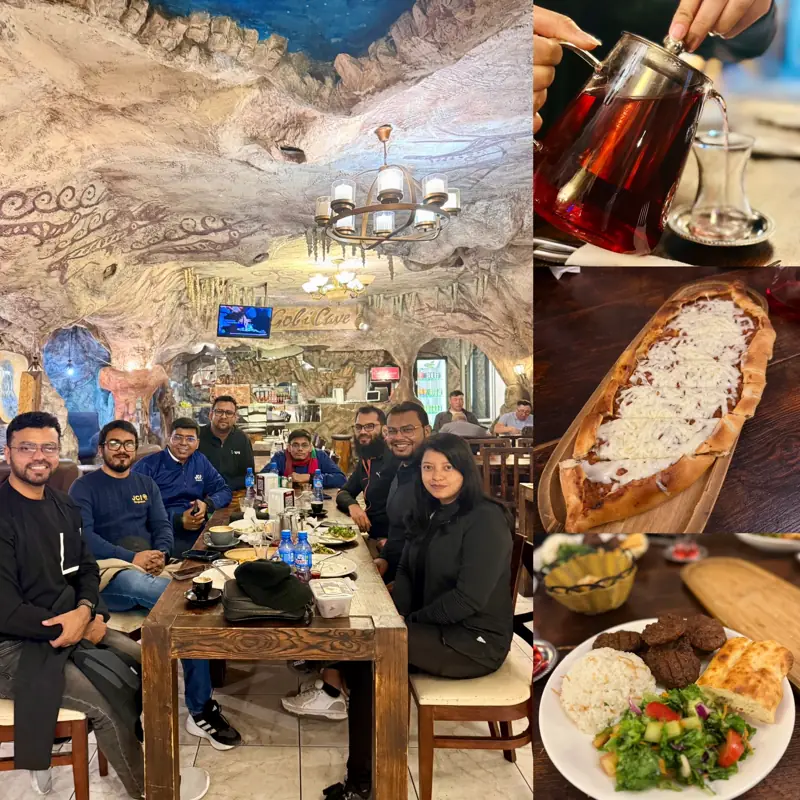
Our first night in Ulaanbaatar set the tone. I found a place called Gobi Cave Turkish Restaurant and the name alone made me curious. Inside, it really is a cave, with rough stone walls and a painted ceiling.
We sat around one long table, a Bangladeshi team eating Turkish food inside a Mongolian cave. Tea, pide, kofte and a lot of laughing. I could not have asked for a better start.
Genghis Khan and Dhaka
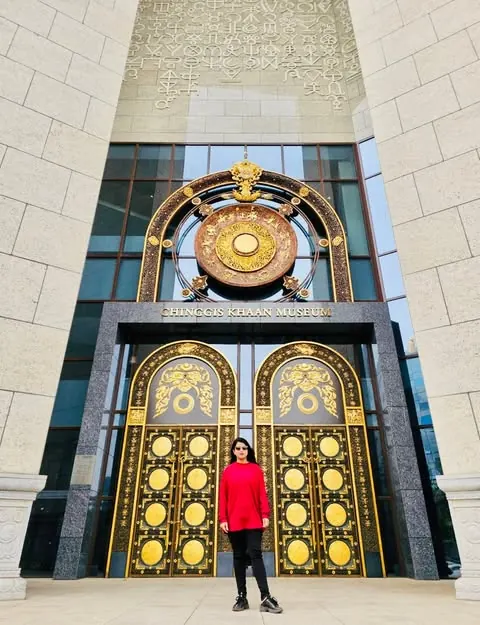
Before we left the city, we stood in front of the Genghis Khan Museum. I grew up reading about Genghis Khan in history books. Standing at those huge golden doors, he suddenly felt less like a chapter and more like a real person who changed half the world.
He started what became the largest land empire the world had seen. From 1221 to 1327, Mongol armies kept pushing into the Indian subcontinent and reached as far as Lahore.
But the link to home hides in one word. “Mughal” is the Indo-Persian form of “Mongol.” Babur, who founded the Mughal Empire, was descended from Genghis Khan on his mother’s side. His empire went on to rule Bengal and Dhaka became the capital of Mughal Bengal.
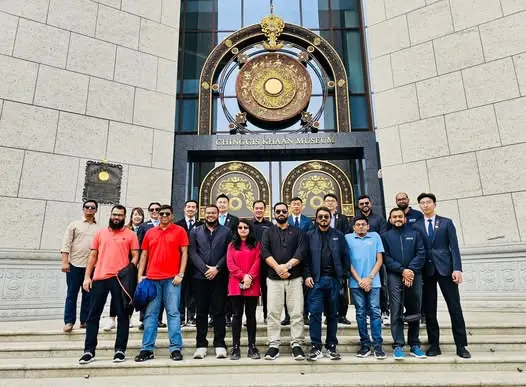
So the next time you walk past Lalbagh Fort in Old Dhaka, remember where that story started. Eight centuries later, a team from Dhaka was standing in front of that museum, smiling for a group photo. Full circle.
600 km into the Gobi
Here was my problem. The Gobi is far from Ulaanbaatar and most travelers give it a 10 to 15 day road trip. After ASPAC ended, we had three days.
So we packed everything in. The sand dunes of Elsen Tasarkhai, often called the “Mini Gobi.” The old capital at Kharkhorin. And around 600 km into the Gobi itself.
Several travel agencies were sponsors at ASPAC, so we booked through one of them right at the venue. Two cars, about 12 of us and a lot of excitement.
Our driver deserves a blog post of her own. Let’s just say it was not the ride we hoped for. That story is for another day.
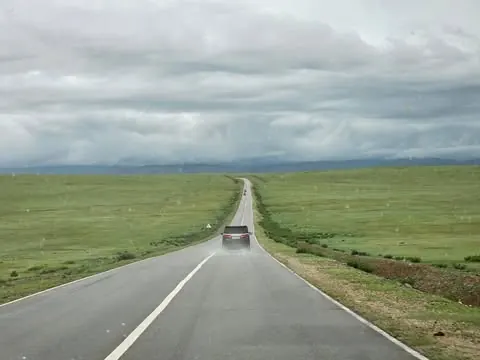
We drove west for the whole first day. The roads were not always roads. At some point the pavement simply stopped and we kept going anyway. Outside the window, the land just kept opening up.
No address, 400 animals
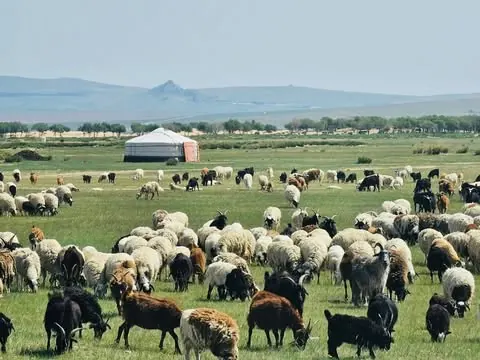
Mongolia is the most sparsely populated country in the world, with about two people per square kilometer. Almost half of everyone lives in Ulaanbaatar. Drive out of the city and the people thin out fast. The animals do not.
At the end of 2023, Mongolia counted about 64.7 million head of livestock. That is around 18 animals for every person in the country. Coming from Dhaka, one of the most crowded cities on earth, I could not stop thinking about that number.
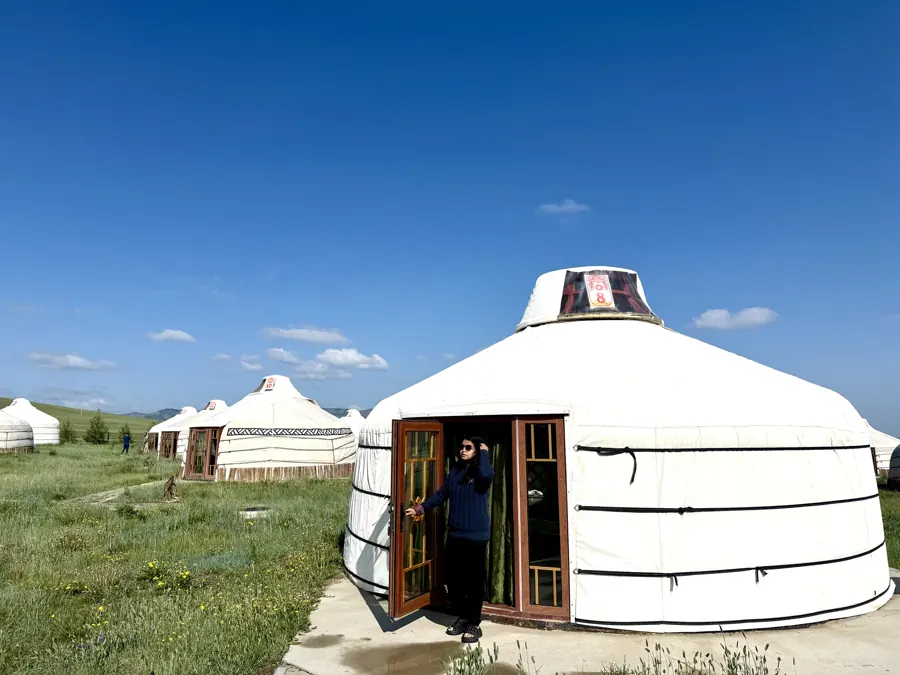
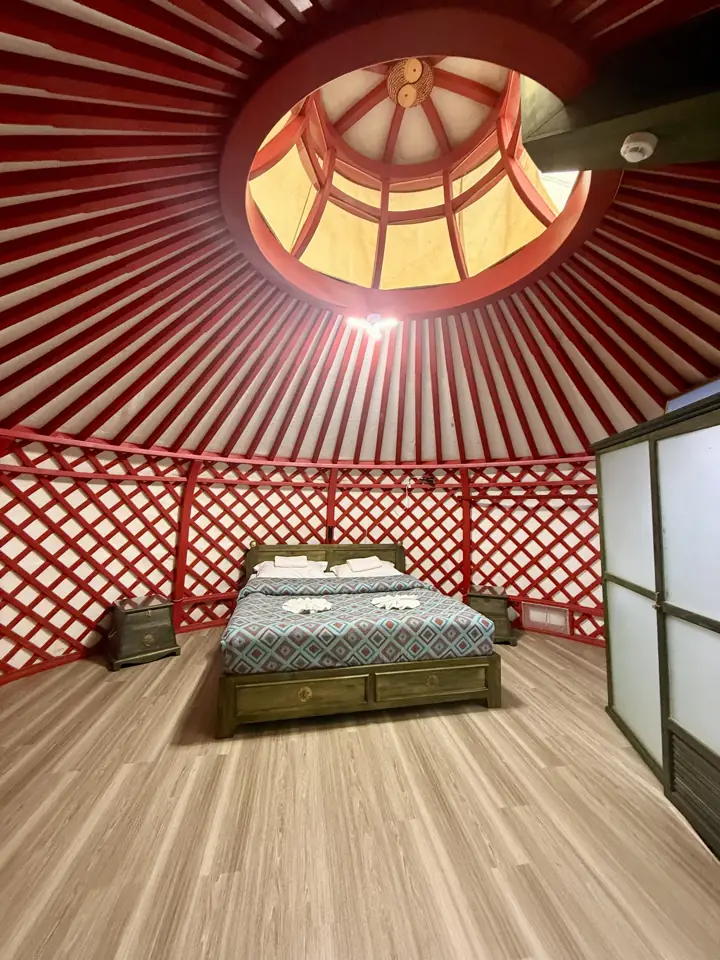
About 30% of Mongolians still live a nomadic or semi-nomadic life. Home is a ger, a round tent with a wooden lattice frame covered in felt. A ger can come down and go back up in a few hours, which matters when your home moves with the seasons.
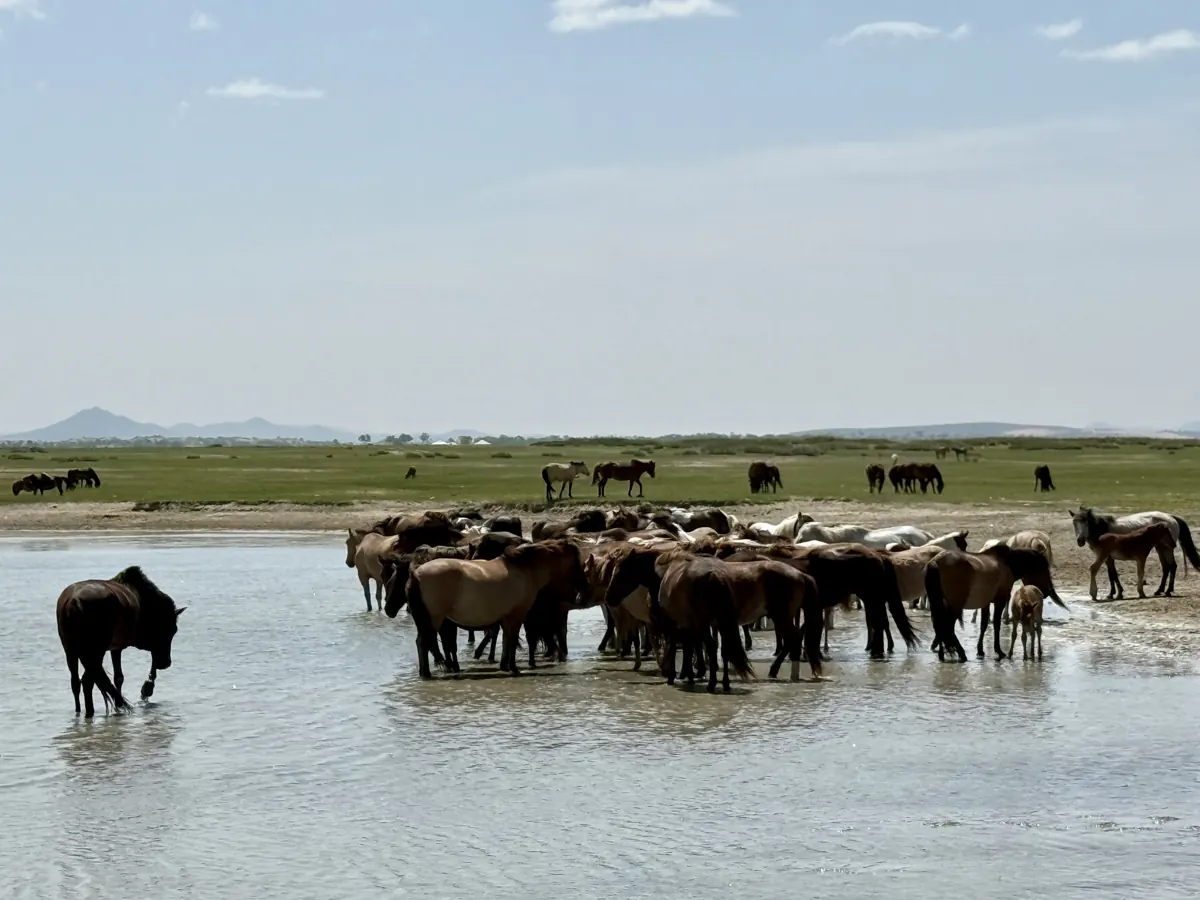
On the way, we stopped at a nomad family’s camp. We saw their ger up close and met their camels. A family of five to seven people usually keeps 200 to 400 animals. Their food, clothes and income all come from them. They make their own milk, meat, butter and yogurt. Four to six times a year they pack up their whole life and move to wherever the grass is better.
It is not an easy life. A brutal winter in 2024 killed more than six million animals. Still, the families carry on the way their ancestors did.
No office, no address, no algorithm. Just the animals, a ger and the next patch of good grass.
Camels in the Mini Gobi
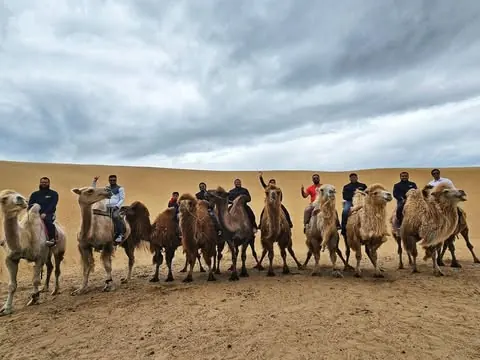
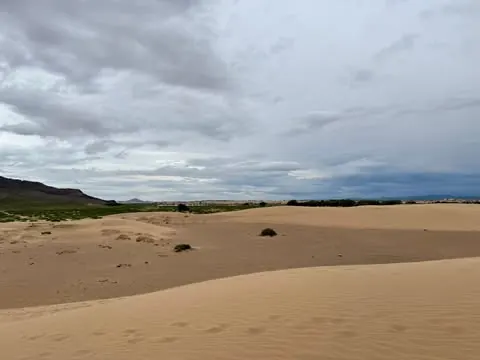
By early evening we reached the dunes of Elsen Tasarkhai and I got on a camel. Mountains on the horizon, a dusty gray track ahead and a deep blue sky above. I kept thinking that the little girl with the schoolbook would never believe this. That moment looked better than any photo I took of it.
A night with no sound
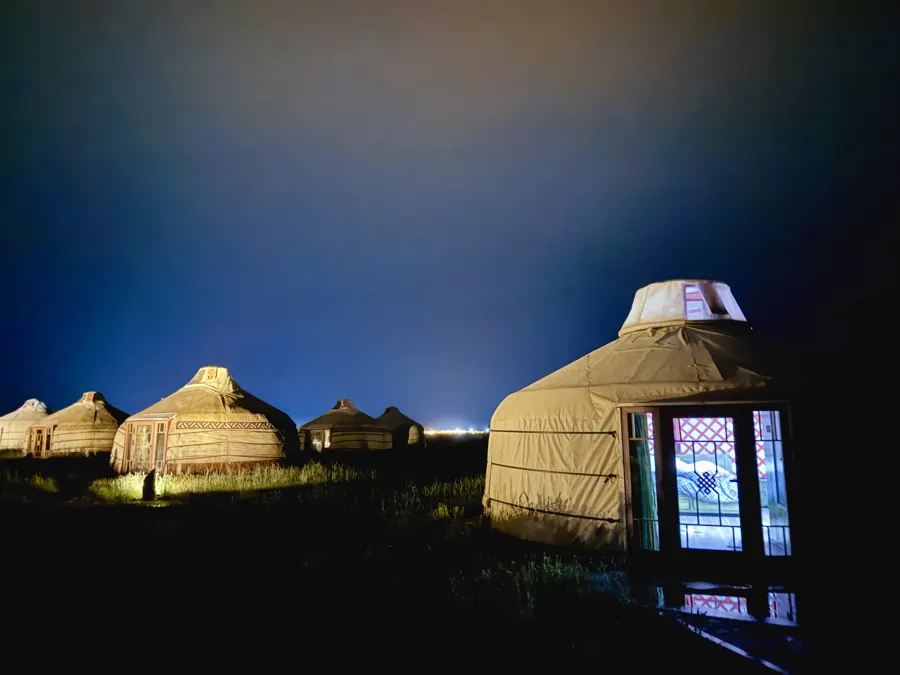
Then came the night I keep coming back to. We stayed at one of the luxury ger camps near Kharkhorin. After a full buffet dinner, I walked into our ger and it was so cozy I forgot I was in a tent.
Then I stepped outside. There was nothing. No lights, no sounds, no notifications. Just the outline of hills in the dark and more stars than I have ever seen. City noise, deadlines and screen time all disappeared.
Stones of an empire
On the second morning, we woke up near Kharkhorin.
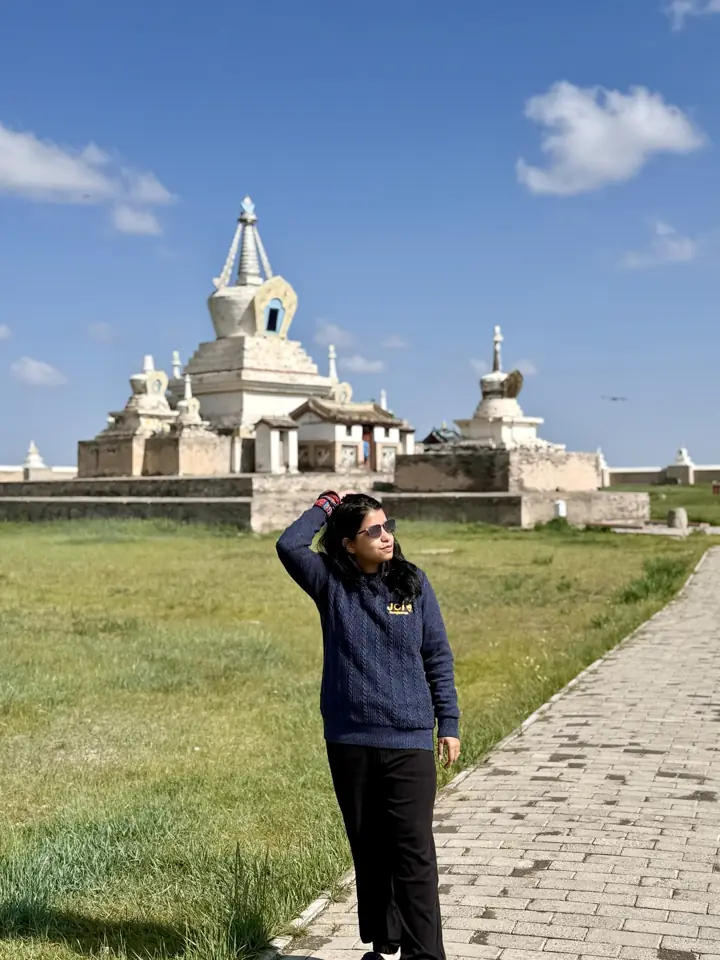
That morning made the history from the museum feel real. We walked through Erdene Zuu Monastery, built in 1585. Its builders used stones from the ruins of Karakorum, the old capital of the Mongol Empire. The capital is mostly gone now, but its stones are still standing in those white walls and stupas.
Today the monastery is part of the Orkhon Valley World Heritage site. Wide grass, blue sky and four centuries of quiet.
What Mongolia reset in me
You can share an experience like this. You cannot really explain it. For me it was a chance to touch a completely different life, even for a few days. Raw, grounding and honestly a once in a lifetime kind of magic. Alhamdulillah.
Mongolia does not try to impress you. The scale does all the work. The silence does the rest. Of all the countries I have been to, this one reset something in me I did not know needed resetting.
Planning a Mongolia trip?
- Check the visa first. We got ours through ASPAC. Today Mongolia offers an e-visa for most countries, so check the latest rules with a local travel agency in Bangladesh.
- Short on time? Combine them. Elsen Tasarkhai sits on the road to Kharkhorin, so you can fit both into a Gobi trip, even in three packed days.
- Book the car through a known agency and agree on the plan with your driver before you leave the city.
- Start in Ulaanbaatar with dinner at Gobi Cave Turkish Restaurant.
Country 49. Ten days, 600 km of steppe and one silent night I will never forget. Read about my road trip through Tunisia or see all my travels.
Mongolia travel FAQ
Do Bangladeshi citizens need a visa for Mongolia?
How far is the Gobi Desert from Ulaanbaatar?
Can you see the Gobi in 3 days?
What is Elsen Tasarkhai?
What is a ger camp like?
How do nomads live in Mongolia today?
Co-founder of xCloud, CMO of Startise and Local President of JCI Dhaka Founders. 55 countries with a Bangladeshi passport.